JillLebofsky may earn a commission if you buy through links on this page, at no extra cost to you. That does not change what we report.
Part of our VivoGut overview. Last checked November 6, 2026.
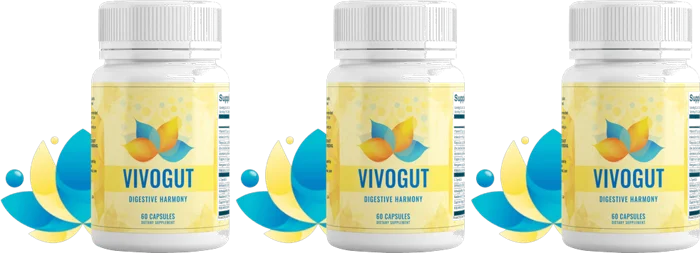
VivoGut ingredients are 14 disclosed doses of minerals, B12, seaweed, L-tyrosine and three herbs, with no probiotic and no fiber. We read the VivoGut Digestive Harmony label on the vendor's contact page on November 6, 2026[1]. Two capsules give 150 mcg of iodine from kelp, which is 100% of the Daily Value, plus 200 mcg of selenium at 364% DV. Those two, with bladderwrack and L-tyrosine, make it read like a thyroid formula.
VivoGut ingredients at a glance
All 14 VivoGut ingredients have a printed dose, and none has strong human evidence for gut health at that dose. The table covers the two-capsule serving; grades are ours, from the studies cited below.
| Ingredient and dose | Role the vendor claims | Evidence grade |
|---|---|---|
| Iodine (from kelp) 150 mcg | "critical for digestive health" | Nutrient; thyroid caution |
| Kelp 15 mg, bladderwrack 50 mg | "soothes your gut lining" | Weak; thyroid caution |
| L-tyrosine 300 mg | bowel movement via dopamine | Weak at this dose |
| Selenium 200 mcg | gut lining repair | Nutrient; high dose |
| Schisandra 240 mg | not named on the sales page | Weak |
| Ashwagandha 200 mg | "smooth bowel movements" | Weak at this dose |
| Cayenne 30 mg | "reducing bloating" | Weak |
| Magnesium 200 mg, zinc 8 mg, copper 0.2 mg | gut lining repair | Nutrients only |
| Manganese 2 mg, molybdenum 50 mcg | not named on the sales page | Nutrients only |
| Vitamin B12 100 mcg | gut lining repair | Nutrient only |
Vendor role wording is from the sales page[2], checked November 6, 2026.
What is in each ingredient, and what does research say?
Each VivoGut ingredient has some human research, but none of it tested gut symptoms at the label dose. Here is what the studies we read measured.
Iodine from kelp (150 mcg)
Iodine is a mineral the thyroid uses to make hormones. The adult RDA is 150 mcg and the upper limit is 1,100 mcg a day from all sources, and most people in the US get enough from food and iodized salt[3]. The label does not say whether bladderwrack adds iodine beyond the 150 mcg.
Kelp (15 mg) and bladderwrack (50 mg)
Both are brown seaweeds. In a double-blind trial of 36 healthy adults, kelp capsules raised TSH within 4 weeks[4]. Bladderwrack at 5 g a day did not change glucose in 36 people with type 2 diabetes[6]. Seaweeds can also carry arsenic and other heavy metals[5].
L-tyrosine (300 mg)
Tyrosine is an amino acid used to make dopamine and thyroid hormone. Studies on thinking under stress used about 7 to 20 g in one dose[7], far above 300 mg. MedlinePlus lists interactions with levothyroxine, levodopa and MAO inhibitors[8].
Selenium (200 mcg)
Selenium is a trace mineral with an RDA of 55 mcg and an upper limit of 400 mcg[9]. In 159 people with mild Graves' eye disease, 200 mcg a day for 6 months helped under medical care[10]. No gut trial was read.
Schisandra (240 mg)
Schisandra is a berry from Chinese herbal practice and the second-largest dose, yet the sales page does not name it. A 12-week trial in 28 women found no change in obesity measures against placebo[11].
Ashwagandha (200 mg)
Ashwagandha is an Indian herb root. A meta-analysis of 5 trials found better sleep, with a clearer effect at 600 mg a day or more[13]. The label gives no withanolide strength.
Cayenne (30 mg)
Cayenne supplies capsaicin. A meta-analysis found a small drop in energy intake at 2 mg or more of capsaicinoids per meal[15]; the label does not state capsaicin content.
Magnesium, zinc and copper
Magnesium oxide 200 mg sits under the 350 mg NIH upper limit for supplemental magnesium; its sleep trials were rated "low to very low quality"[16]. Zinc 8 mg and copper 0.2 mg are far below their upper limits of 40 mg and 10 mg[19].
Manganese and molybdenum
Manganese 2 mg is close to the adult Adequate Intake of 1.8 to 2.3 mg and under the 11 mg upper limit[17]. Molybdenum 50 mcg is just above the 45 mcg RDA, with an upper limit of 2,000 mcg[18].
Vitamin B12 (100 mcg)
B12 has no upper limit because of its low potential for toxicity[20]. It helps people who lack it; we read no gut trial.
How transparent is the VivoGut formula?
The VivoGut Digestive Harmony formula is transparent on doses: there is no proprietary blend, so every milligram can be checked. The gaps are elsewhere.
- No extract strength for ashwagandha or schisandra, and no capsaicin figure for cayenne.
- The sales page names 6 headline ingredients; schisandra, zinc, manganese and molybdenum appear only on the label[2].
- The sales page says "vegan", but the capsule uses bovine gelatin, and the label says it contains soy.
- A second label, NutraBoost, has fiber and L. acidophilus in a 695 mg proprietary blend with no individual amounts. It is not on the price grid.
When a third-party list differs, the vendor label read on November 6, 2026 wins.
Ingredient safety and interactions
The main safety issue in these ingredients is iodine and the thyroid. Excess iodine can cause an overactive or underactive thyroid in susceptible people, and people with Hashimoto disease or thyroid nodules are most at risk[3]. Tyrosine is listed as interacting with levothyroxine[8], and kelp capsules moved TSH in 4 weeks[4], so anyone on thyroid medicine should ask a doctor first.
Schisandra-type products raised tacrolimus blood levels in pooled studies[12]. Ashwagandha has rare reports of liver injury[14]. Selenium at 200 mcg can stack with a multivitamin toward the 400 mcg limit. The full list is on our VivoGut side effects page.
Do these ingredients prove VivoGut works?
No. Studies of single ingredients, mostly at other doses and for other goals, cannot show that this capsule helps digestion. None of the trials we read tested bloating, regularity or the gut lining. Our does VivoGut work page lays out the evidence levels. If gut comfort is the goal, fiber such as psyllium husk has gram-dose trials behind it.
To see the label and price grid on the vendor page, use the link below.
Back to the VivoGut overview.
Frequently asked questions
Does VivoGut contain probiotics?
The VivoGut Digestive Harmony bottle on the price grid lists no probiotic and no fiber. A different label called NutraBoost, shown on the vendor's contact page, lists L. acidophilus at 1.5 billion CFU, but it was not among the bottle options sold on November 6, 2026.
How much iodine is in VivoGut?
The label lists 150 mcg of iodine from kelp per two-capsule serving, which is 100% of the Daily Value. It also holds 50 mg of bladderwrack, and the label does not say whether that adds iodine beyond the 150 mcg listed.
Is VivoGut vegan?
The sales page says vegan, but the label lists bovine gelatin with chlorophyll as a capsule ingredient. That makes it unsuitable for vegans and vegetarians as labeled. The label also says the product contains soy, checked November 6, 2026.
Is the selenium dose in VivoGut too high?
Each serving has 200 mcg, or 364% of the Daily Value. That is half the 400 mcg adult upper limit set by the NIH, so adding a multivitamin that also contains selenium can push total intake close to that limit.
Does VivoGut have a proprietary blend?
The Digestive Harmony bottle does not. All 14 doses are printed. The separate NutraBoost label does use a 695 mg proprietary blend with no individual amounts, which makes its fiber and probiotic doses impossible to check.
Sources
- VivoGut contact and FAQ page with Digestive Harmony and NutraBoost labels. tryvivogutpro.com, read November 6, 2026.
- VivoGut sales page. tryvivogutpro.com, read November 6, 2026.
- Iodine fact sheet for consumers (archived copy). NIH Office of Dietary Supplements, read October 20, 2026.
- Kelp capsules and thyroid function, double-blind randomized trial (PMID 14583417). PubMed, read October 20, 2026.
- Edible seaweed: iodine and arsenic risks (PMID 30840077). PubMed, read October 20, 2026.
- Dried Fucus vesiculosus and glucose in type 2 diabetes (PMID 38931192). PubMed, read October 28, 2026.
- Tyrosine and cognition under stress (PMID 26424423). PubMed, read October 19, 2026.
- Tyrosine. MedlinePlus, US National Library of Medicine, read October 19, 2026.
- Selenium fact sheet for health professionals (archived copy). NIH Office of Dietary Supplements, read October 20, 2026.
- Selenium and the natural course of mild Graves' orbitopathy (PMID 21591944). PubMed, read October 20, 2026.
- Schisandra chinensis fruit in women with obesity, randomized trial (PMID 26048342). PubMed, read October 2, 2026.
- Wuzhi capsule and tacrolimus levels, meta-analysis (PMID 38150711). PubMed, read October 2, 2026.
- Ashwagandha and sleep, meta-analysis of 5 trials (PMID 34559859). PubMed, read October 2, 2026.
- Ashwagandha-associated liver injury, case series (PMID 31991029). PubMed, read October 2, 2026.
- Capsaicinoids and energy intake, meta-analysis (PMID 24246368). PubMed, read October 19, 2026.
- Magnesium for insomnia in older adults, meta-analysis (PMID 33865376). PubMed, read October 2, 2026.
- Manganese fact sheet for health professionals. NIH Office of Dietary Supplements (updated March 29, 2021), read November 6, 2026.
- Molybdenum fact sheet for health professionals. NIH Office of Dietary Supplements (updated March 30, 2021), read November 6, 2026.
- Copper fact sheet for health professionals (archived copy). NIH Office of Dietary Supplements, read October 19, 2026.
- Vitamin B12 fact sheet for health professionals (archived copy). NIH Office of Dietary Supplements, read October 2, 2026.
This page is general information, not medical advice. Dietary supplements are not reviewed by the FDA for safety or effectiveness before they are sold and are not intended to diagnose, treat, cure or prevent any disease. Talk to your doctor before taking any supplement, especially if you are pregnant, nursing, take medication or have a health condition.