JillLebofsky may earn a commission if you buy through links on this page, at no extra cost to you. That does not change what we report.
Part of our VivoGut overview. Last checked November 6, 2026.
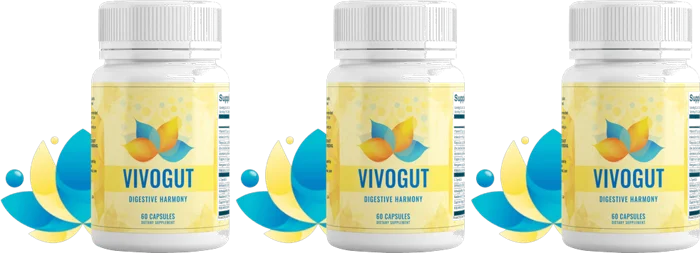
Does VivoGut work for gut health? Based on the label, we see no solid reason to expect it to. The bottle sold on the vendor's price grid is VivoGut Digestive Harmony, and its 14 listed ingredients include no probiotic and no fiber[2]. The largest doses are L-tyrosine 300 mg, schisandra 240 mg and magnesium 200 mg, plus iodine 150 mcg from kelp. In a 4-week trial, kelp capsules raised TSH, a thyroid hormone marker, in healthy adults[3].
Does VivoGut work? The short answer
We cannot say VivoGut works for digestion, and the label gives little reason to think it would. The sales page calls it "The Ancient Underwater Solution For Incredible Gut Health" and a "14-in-1 Gut Health Essential Formula"[1]. Those are the vendor's words.
The ingredients on the Digestive Harmony label are minerals, B12, seaweed, an amino acid and three herbs. Products sold for bloating or regularity usually carry probiotics or fiber such as psyllium; this one carries neither. The vendor's research claim, "Every ingredient has been backed by research", is about single ingredients. Nothing we read describes a trial of the finished capsule.
What can be concluded: every dose is printed, which lets you check it. What cannot be concluded: that the capsule repairs a gut lining, eases bloating or speeds bowel movements. Those claims stay attributed to the vendor.
Which evidence levels should you not confuse?
Four levels of evidence get mixed up on supplement sales pages, and VivoGut reaches only the first two for any outcome, none of them digestive. Knowing the difference keeps a lab finding from being read as a result in people.
Plausibility
A mechanism story, such as "tyrosine boosts dopamine to encourage bowel movement" from the sales page[1]. A story is a hypothesis, not a measured result.
Ingredient trials
Human studies of one ingredient, often at a different dose. Tyrosine was studied at 100 to 300 mg per kg of body weight, about 7 to 20 g in one dose, for thinking under stress[7]. The capsule gives 300 mg.
Finished-product trial
A placebo-controlled trial of the exact VivoGut capsule. We did not see one cited.
Replication
A second independent trial with the same result. Without a first trial, there is nothing to replicate.
VivoGut claims vs what the evidence supports
The vendor's gut claims do not match what the trials of these ingredients measured. The table pairs each claim with what the studies we read actually tested.
| Vendor claim | Reasonable reading | Limitation |
|---|---|---|
| Bladderwrack "soothes your gut lining" | Bladderwrack trials tested blood sugar and cholesterol | 5 g a day did not change glucose[5]; label dose is 50 mg |
| Cayenne "reducing bloating" | Capsaicin trials measured appetite | Small drop in energy intake at 2 mg capsaicinoids or more per meal[10]; capsaicin in 30 mg cayenne is not stated |
| Ashwagandha "promoting smooth bowel movements" | Trials measured sleep | Clearer effect at 600 mg a day or more for 8 weeks[8]; label gives 200 mg |
| Minerals and B12 "repair the gut lining" | Nutrients that matter only if you lack them | No gut-lining trial in what we read |
If you still want to compare the bottle with the claims yourself, the full label is on the vendor page.
Which ingredients matter most?
The ingredients that matter most in VivoGut are the iodine sources, because they can change thyroid function, and none of the doses match a gut trial. The gaps fall into three kinds.
- Dose: bladderwrack trials used 500 to 2,000 mg of a polyphenol extract a day, and a 2,000 mg extract raised HDL 9.5% without changing LDL or glucose[6]. VivoGut lists 50 mg of whole thallus.
- Form: ashwagandha and schisandra have no stated extract strength, so they cannot be matched to any study.
- Population: the only schisandra trial we read, in 28 women with obesity, found no change in obesity measures against placebo over 12 weeks[9].
Iodine is the ingredient with a measurable effect. The NIH sets the adult upper limit at 1,100 mcg a day from all sources[12], and excess iodine can trigger an underactive or overactive thyroid in susceptible people[4]. The full breakdown is on our VivoGut ingredients page.
What results are realistic to expect?
From the trials we read, the one change you could expect is in thyroid markers, not digestion. In the kelp trial, 2 to 4 kelp capsules a day raised TSH within 4 weeks, and the rise grew with the dose[3].
No trial we read measured bloating, stool frequency or gut comfort with these ingredients at these doses. If gut comfort is the goal, our main-site guide to gut health supplements covers fiber and probiotic options, and our psyllium husk guide covers the fiber with the most trial data. A separate VivoGut NutraBoost label with fiber and L. acidophilus appears on the contact page[2], but it is not on the price grid, and probiotic effects belong to named strains[11].
When should you see a doctor instead?
See a doctor before any supplement if gut trouble is new, lasting or getting worse. Bloating and irregular stools have many causes, and our IBS symptoms guide explains common patterns.
See a doctor right away if you have:
- blood in your stool or black, tarry stools
- weight loss you cannot explain
- severe or constant belly pain, or a hard, swollen belly
- vomiting that will not stop, or trouble swallowing
- fever with diarrhea, or bowel changes after age 50
- a racing heartbeat, shaking or a swollen neck after starting an iodine product
Anyone with a thyroid condition, or who takes thyroid medicine, should ask a doctor before taking VivoGut. Our VivoGut side effects page lists the medicines to check.
Evidence conclusion
The evidence does not support VivoGut as a gut product, and the thyroid caution outweighs any likely benefit for many readers.
| Decision question | Our assessment, checked November 6, 2026 |
|---|---|
| Is there a trial of the finished capsule? | None shown to us |
| Does the label hold a probiotic or fiber? | No, in Digestive Harmony |
| Do label doses match ingredient trials? | No, mostly far below |
| Is there a known safety signal? | Yes, iodine and thyroid function |
| Are doses disclosed? | Yes, all 14 |
If you want to check the label, price and refund terms on the vendor page, use the link below, and read is VivoGut legit first.
Back to the VivoGut overview.
Frequently asked questions
Is VivoGut a probiotic?
No. The VivoGut Digestive Harmony bottle sold on the price grid lists no probiotic and no fiber. A separate NutraBoost label with L. acidophilus appears on the vendor's contact page, but it is not one of the bottle options on the price grid, checked November 6, 2026.
How long does VivoGut take to work?
No trial of the VivoGut capsule shows a timeframe for gut results. The one measured change we found for its ingredients is thyroid related: kelp capsules raised TSH within 4 weeks in a small trial of healthy adults, so watch for thyroid symptoms instead.
Does VivoGut help with bloating?
Nothing we read shows that. The vendor says cayenne reduces bloating, but the capsaicin trials we read measured appetite, and the label does not state how much capsaicin its 30 mg of cayenne holds. Persistent bloating is worth a talk with a doctor.
Can VivoGut affect my thyroid?
It can. Each serving has 150 mcg of iodine from kelp plus bladderwrack and L-tyrosine. Excess iodine can push the thyroid either way in susceptible people, so anyone with a thyroid condition or on thyroid medicine should ask a doctor first.
Is VivoGut good for weight loss?
VivoGut is sold for gut health, not weight. The only schisandra trial we read found no change in obesity measures against placebo, and bladderwrack trials mostly showed no effect on glucose. We found no evidence that the capsule changes body weight.
Sources
- VivoGut sales page. tryvivogutpro.com, read November 6, 2026.
- VivoGut contact and FAQ page with Digestive Harmony and NutraBoost labels. tryvivogutpro.com, read November 6, 2026.
- Kelp capsules and thyroid function, double-blind randomized trial (PMID 14583417). PubMed, read October 20, 2026.
- Iodine excess and thyroid dysfunction (PMID 22820214). PubMed, read October 20, 2026.
- Dried Fucus vesiculosus and glucose in type 2 diabetes (PMID 38931192). PubMed, read October 28, 2026.
- Fucus vesiculosus polyphenol extract in overweight adults (PMID 34015499). PubMed, read October 28, 2026.
- Tyrosine and cognition under stress (PMID 26424423). PubMed, read October 19, 2026.
- Ashwagandha and sleep, meta-analysis of 5 trials (PMID 34559859). PubMed, read October 2, 2026.
- Schisandra chinensis fruit in women with obesity, randomized trial (PMID 26048342). PubMed, read October 2, 2026.
- Capsaicinoids and energy intake, meta-analysis (PMID 24246368). PubMed, read October 19, 2026.
- Probiotics: What You Need To Know. NCCIH, read October 20, 2026.
- Iodine fact sheet for consumers (archived copy). NIH Office of Dietary Supplements, read October 20, 2026.
This page is general information, not medical advice. Dietary supplements are not reviewed by the FDA for safety or effectiveness before they are sold and are not intended to diagnose, treat, cure or prevent any disease. Talk to your doctor before taking any supplement, especially if you are pregnant, nursing, take medication or have a health condition.